
Ship Reports and Monitoring Platform
A ship data platform that gives brokers, port agents and claims teams a dated paper trail for any vessel by IMO number, powered by nightly data pipelines and a privacy-first database.

Technologies Used
About This Project
The Challenge
Before fixing a ship, sending one into port or building a claim, maritime professionals need the ship's record: which official lists it appears on, where it has been, and what has changed. That information is scattered across government lists, port data and tracking providers, each in its own format. It rarely arrives as a dated record that can be filed or shown to a principal.
The Solution
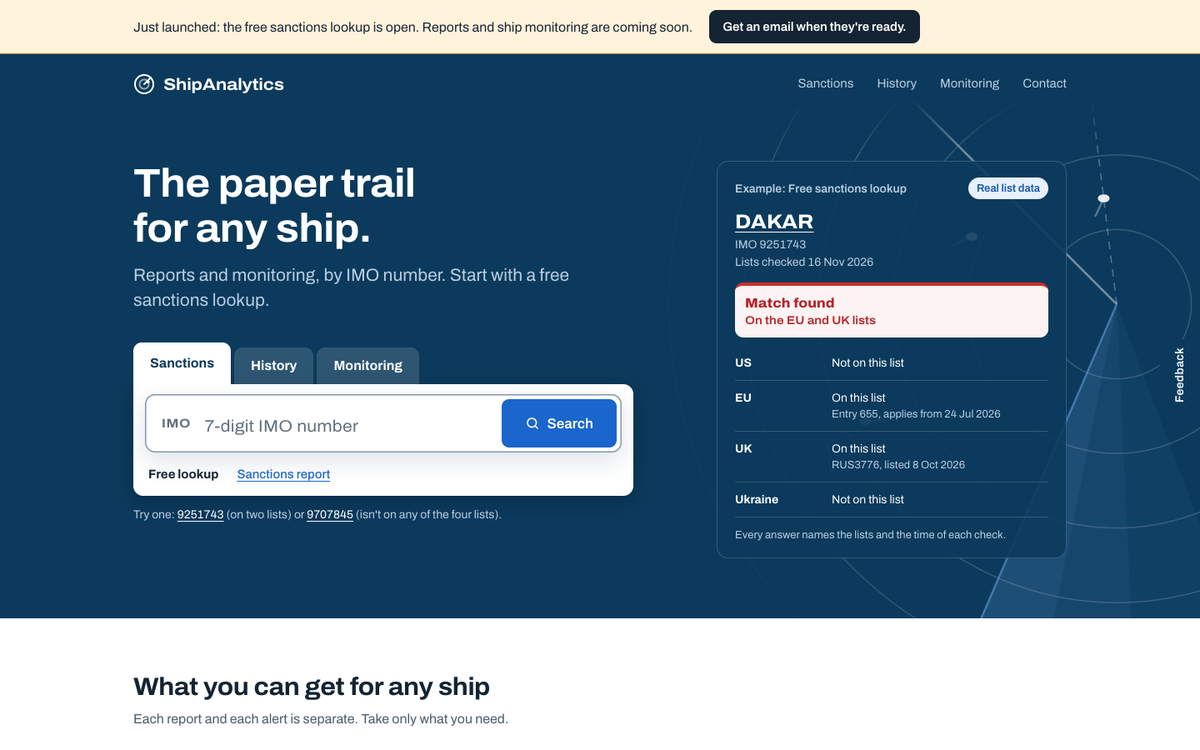
ShipAnalytics is a ship data platform built around one input: the IMO number. Each product is a separate short report or alert, so a customer pays only for what they need. Every answer names its sources and the time each one was checked.
The platform is in soft launch. A free lookup against the official US, EU, UK and Ukrainian lists is live, along with a searchable database of over 2,200 listed ships and insight pages that chart how the lists change. Paid reports and alerts are next, with checkout ready to switch on:
- History: port calls, past positions, inspections, and the names and flags a ship has had
- Monitoring: email alerts for port arrivals and departures, destination or ETA changes, and list changes
Technical Highlights
1. Data Ingestion Pipeline
Dedicated parsers normalize each official source into a common data model. Scheduled jobs refresh every source nightly, with automatic retry runs and a health check that raises an alert when a source goes stale.
- A publication gate keeps a bad import from reaching the public site
- A classifier separates companies from individuals, with a review queue and decision log for ambiguous entries
2. Privacy by Design
Official lists name people as well as companies. Personal names are kept in private tables, and public pages read only from restricted database views that expose ships and companies. Row-Level Security is enabled on every table, and only the server can reach the data.
3. Verifiable Dated Reports
Reports follow fixed rules, the same for every ship, and are never written or edited by a person. Each is rendered server-side as a PDF with headless Chromium and stamped with a SHA-256 fingerprint, so a recipient can confirm later that the file has not been changed. Orders go through Stripe Checkout, and a scheduled job handles delivery and automatic refunds.
4. Production Discipline
- About 4,000 automated tests: Vitest unit and integration tests, plus pgTAP tests for the database
- Versioned schema migrations, a strict Content Security Policy, and startup checks for required configuration
- Rate limiting with Upstash Redis, error monitoring with Sentry, and uptime checks for every scheduled job
Project Gallery

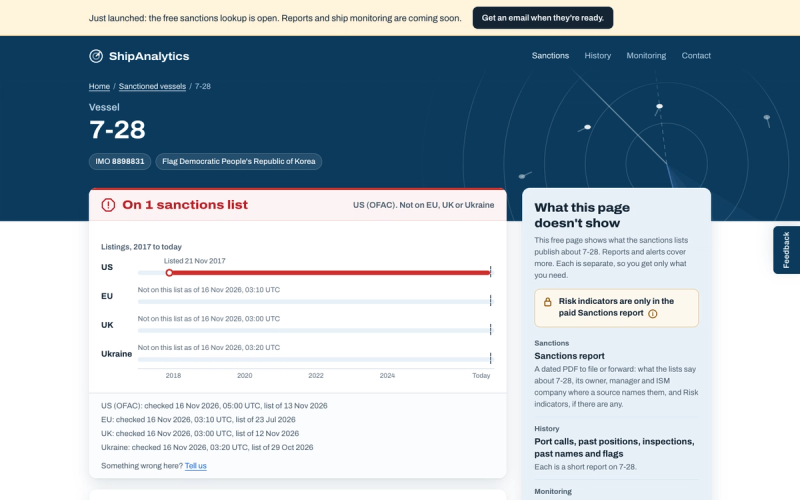
A ship's page: its record on each source over time, with the reports and alerts available for it.

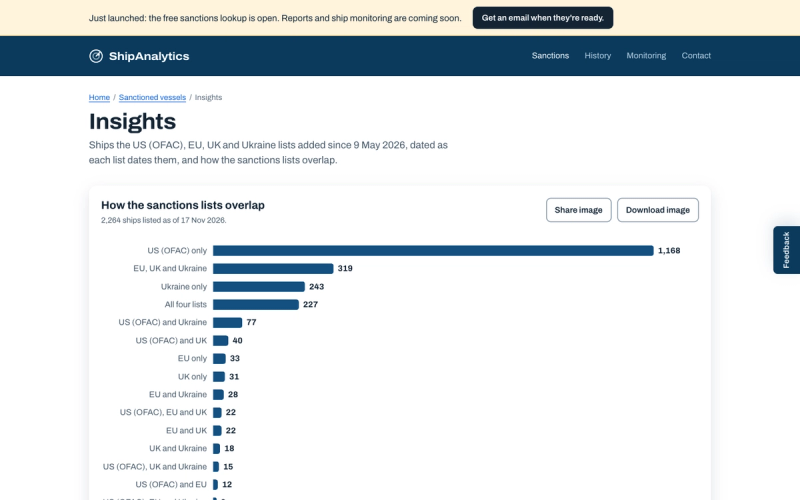
Insights generated from the sources' own data, refreshed with every nightly update.

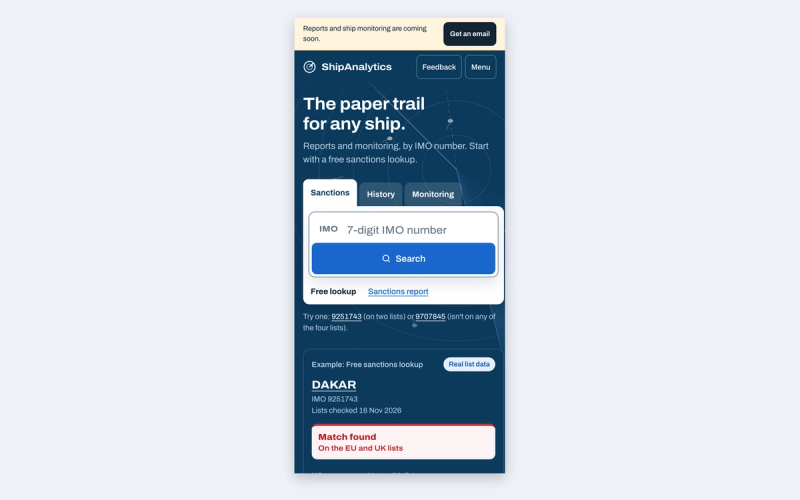
Mobile-first layout: the same IMO search and answer on a phone.
Interested in working together?
Let's discuss how I can help bring your project to life.